The CFO’s Ultimate Growth Multiplier

● How creating a learning culture drives growth.
● The four types of space CFOs must create to stay adaptable.
Alvin Toffler famously said:
The CFOs who will be recognised as truly world class in the next decade aren't the ones with the deepest expertise. They're the ones with the greatest learning agility.
Unlike technical knowledge, learning agility can't be automated, outsourced, or commoditised. It's what allows you to navigate complexity, pivot when needed, and stay ahead of disruption.
It's also at the heart of Carol Dweck's Growth Mindset, or the belief that abilities and intelligence aren't innate but can be developed through effort and persistence.
In 2025, world-class CFOs aren't identified by their answer to the question"What do you know?" but rather "How fast can you learn?"
1. Mental Agility – Seeing problems from multiple angles and simplifying complexity.
2. People Agility – Working well with diverse teams through openness and emotional intelligence.
3. Change Agility – Embracing experimentation, learning fast, and bouncing forward from setbacks.
4. Results Agility – Delivering under pressure, even in unfamiliar or uncertain conditions.
5. Self-Awareness – Understanding your own strengths, blind spots, and impact on others.
So far, so clear. But here's the tension that any slightly evolved leader bumps up against: cultivating these traits requires something most CFOs don't have nearly enough of; the space to think.
In my CFO Boardroom program, we allocate time to designing the four types of space critical to facilitate learning agility;
1. Personal Space – Time for Reflection and Insight
Growth starts with self-awareness. The most grounded leaders deliberately carve out time to think: What's working? What needs to change?

3. Physical Space – Environments That Trigger Fresh Thinking
Sometimes, changing your physical surroundings is what unlocks a new idea or shifts your perspective. Whether it's stepping away from the office, structuring quiet work time, or having conversations outside your usual circle, a change in scenery can prompt a change in perspective.

CFOs in our Boardroom consistently tell me that this is one of the most valuable aspects of our community: space to think. Not just react. Not just deliver. But to think.
When Satya Nadella became CEO of Microsoft in 2014, the company was in trouble. Once the undisputed leader in tech, Microsoft had become stagnant. Microsoft's market value had flatlined, and the company was widely seen as outdated and struggling to keep pace with more agile competitors.
Nadella's first order of business was to pivot Microsoft from what he described as a "know-it-all" culture to a "learn-it-all" culture."
Nadella set about creating space for people to question assumptions, challenge long-held beliefs, and experiment with new ideas; without fear of failure. He scrapped the cutthroat performance ranking system and replaced it with a focus on growth. He supported staff to get curious and to collaborate more. He encouraged leaders to listen more than they spoke. And he made learning agility a core part of Microsoft's culture.
As a result, Microsoft's market value soared from $300 billion in 2014 to over $2.5 trillion today. The company reinvented itself as a cloud-first business, becoming a dominant player in AI, enterprise software, and cloud computing.
Employee engagement improved, innovation accelerated, and Microsoft regained its status as one of the most powerful companies in tech.
Microsoft's transformation proves that no matter how big and established a company might be, the ability to learn, unlearn, and relearn is what determines a businesses long-term success.
The pace of change isn't slowing down. AI is advancing, business models are evolving, and market conditions are shifting from one day to the next The question isn't if disruption will come, it's when.
If your industry changed overnight, would you be ready?
⋅ Where are you making space for growth?
⋅ How are you ensuring your team feels safe to experiment, fail, and learn?
⋅ And when was the last time you deliberately stepped back to think, not just react?
The CFOs who answer these questions with intention will be the ones leading the future of finance.
Are you creating the space to be one of them?
I'd love to hear your thoughts.

Author: Alena Bennett
Alena works with leaders and their teams to connect technical and leadership skills so they can deliver to deadline without killing their people.

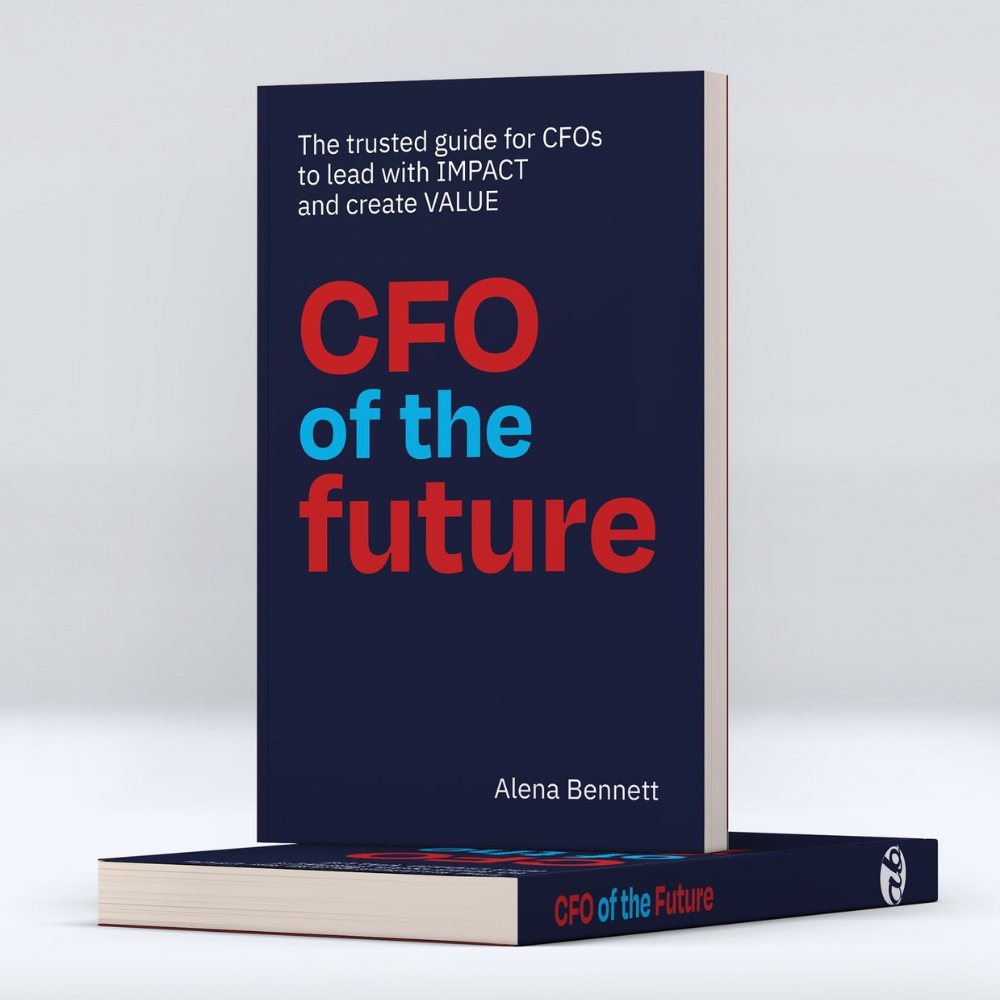
This is the trusted guide for CFOs to lead with IMPACT and create VALUE.

It's time for women in finance to find power in their purpose!