How CFOs Can Deal with Dysfunction

Over the years, I've learned that dysfunctional dynamics - whether it's within the finance team, across departments, or with external stakeholders - can be navigated with a blend of empathy, curiosity, and a little strategy.
One CFO I worked with thought her team was underperforming on budget submissions. The data showed delays, inaccuracies, and general frustration. But when we dug deeper, we realised the problem wasn't a skills issue - it was trust. Different departments weren't sharing critical information out of fear of having their budgets cut or reallocated, leaving finance in the dark and causing issues with reporting.
When you ask this question, you move beyond symptoms to uncover root causes. It forces everyone involved to stop focusing on the surface and dig deeper into the real, underlying dysfunction.
Recently, I was working with a CFO whose finance team was constantly at odds with the operations department. The problem? The finance team was hyper-focused on cost reduction, while operations had growth goals that required higher expenditures. They were unknowingly working against each other. Aligning their goals not only eased the tension, but also increased productivity by ensuring everyone was pulling in the same direction.
Alignment is the key to bringing clarity and purpose back into the room.
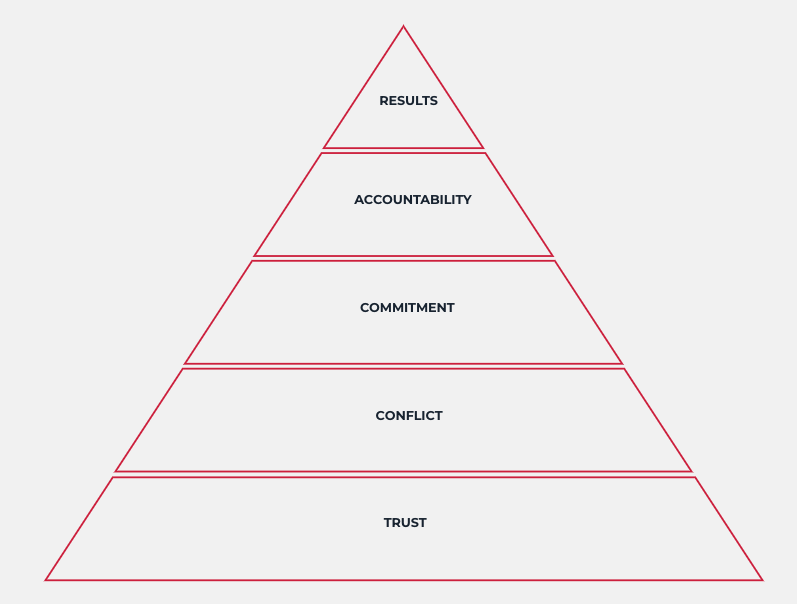
familiar dysfunctions and his proven pathway to overcome them.
I remember a CFO who was on the verge of burnout because his communication style didn't match his team's needs. He was an emailer, shooting off instructions and expecting results. His team, however, worked best with in-person interactions. Once he switched to a more hands-on communication approach, the friction began to ease. Asking What communication style works best here? makes sure everyone is speaking in a way that everyone can understand and it's the fastest way to get to an outcome.
Reality: Some team members might not fully grasp how their daily tasks contribute to achieving broader financial goals. This disconnect can lead to misaligned efforts and missed targets.
• Assumption: "The timeline for delivering the financial report is clear to all departments."
Reality: Different departments may be working off different deadlines, assuming they have more time than they actually do. This can cause last-minute rushes and errors in reporting.
• Assumption: "Stakeholders are aware of the budget constraints for upcoming projects."
Reality: Some stakeholders might be unaware of budget limitations, leading to overspending or proposing initiatives that aren't financially feasible.
• Assumption: "Everyone interprets financial data in the same way."
Reality: Different teams may interpret financial reports differently, leading to confusion and miscommunication. One department might see a positive trend, while another could interpret the same data as a warning sign.
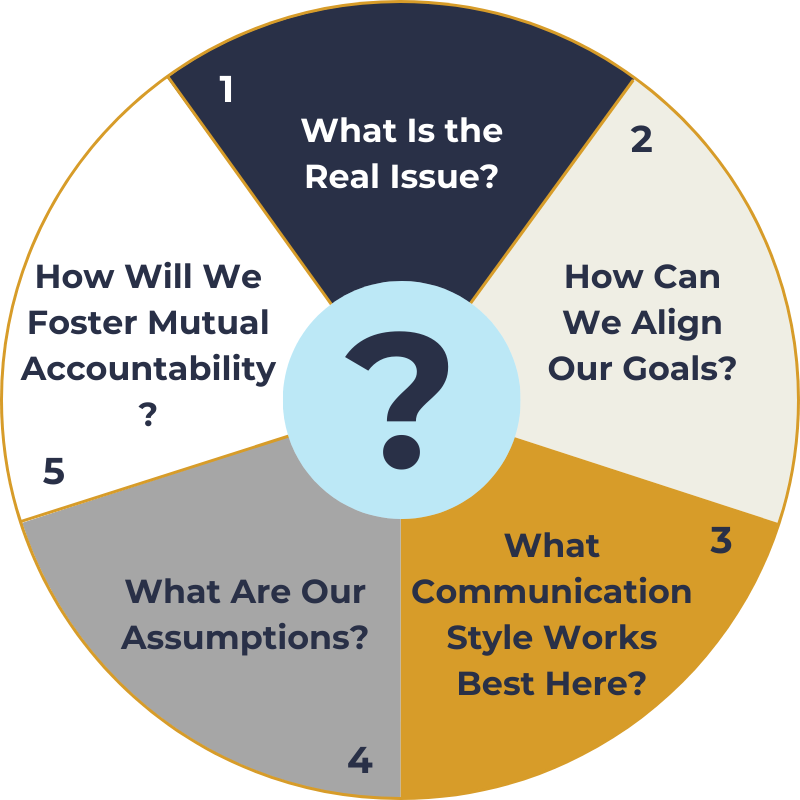
In one coaching session, a CFO was facing a crisis of responsibility within her team. Each person was passing accountability to someone else, leading to dropped balls and missed targets. By introducing clear accountability structures - weekly check-ins, action tracking, and real-time feedback - they transformed from a reactive to a proactive team.
Accountability is a cornerstone of any successful finance team. Without it, dysfunction thrives.
How would this process help you get a dysfunctional relationship back on track?
Asking these five questions has transformed countless challenging conversations for me and the CFOs I work with. They help us get to the heart of the matter, align efforts, and move forward with clarity and purpose. All leaders, but especially CFOs can use these questions as their go-to toolkit when dysfunction rears its ugly head. You'll be amazed at the difference they can make.
What's the first question you'll ask the next time you face dysfunction in your role?
Are there assumptions in your team dynamics that need to be brought to light?
How could mutual accountability improve the outcomes for your team?
I'd love to hear your thoughts...
If your CFO is having a hard time managing dysfunction within their business or their team, you need to sign them up for the CFO Boardroom.
The CFO Boardroom is my signature program. In it, CFOs join a confidential community of other CFO's ready to play bigger, increase their impact and elevate the office of the CFO in the next 12 months. Our December intake is now open.

Author: Alena Bennett
Alena works with leaders and their teams to connect technical and leadership skills so they can deliver to deadline without killing their people.


This is the trusted guide for CFOs to lead with IMPACT and create VALUE.

It's time for women in finance to find power in their purpose!