7 unexpected reasons why online coaching trumps face-to-face
• Discover seven reasons to consider online coaching, that have nothing to do with logistics
• Learn how online coaching outperforms face-to-face for meaningful growth
• Build your capability without sacrificing unnecessary time and energy
Have you noticed that even in a post-Covid world, there's an ingrained belief in many organisations that face-to-face equals better? I can understand why, to an extent; we now know that communal spaces for collaboration existed even in Ancient Rome, and it's hard to break the habit of several centuries.
Yes, there's been a shift in mindset as far as valuing online coaching for its logistical perks, but this overlooks the deeper benefits that are important for senior leaders. I've discovered seven reasons why online coaching and networking for leaders outperforms face-to-face, for more meaningful, long-term growth; particularly in small groups where participants are clear on their objectives and willing to engage.
1. You can show up as yourself, not as your role
Before walking into a room, most of us instinctively manage how we present ourselves, through the clothes and shoes we wear, and even the car we arrive in. In a physical setting, those cues shape how people position us before we speak. Online, without the visual hierarchy cues, it's easier to participate as a peer, which often leads to richer conversations and more candid problem-solving.
2. Your own environment increases feelings of emotional safety
From what I, and many leaders I work with, have observed, being in a familiar setting can lower pressure by creating an environment of psychological safety. For senior leaders, this often means feeling less judge
3. It builds the habit of reflection
4. You can be challenged more directly
When you're the steward of risk, cost and credibility, being challenged in a physical room can feel like a public event. When a facilitator asks a hard question or offers a sharp reframe, every eye in the room turns to the person being challenged. Online, the reduced spotlight makes it easier to hear the hard questions; the ones that help yo
5. Continuity trumps one-off intensity
The cadence of short, spaced online sessions allows you to apply learnings between those sessions, giving you room to experiment: test an alternative conversation with your CEO, shift how you challenge a GM, adjust how you frame a decision. That's where capability really builds; in the space between the sessions, not in a single two-day workshop.
6. You're not 'on show' in the same way
I've heard many senior leaders report that in a physical room, they feel like they're on stage. People watch how they enter, where they sit, and who they talk to at breaks. That performance layer can drain energy and attention you'd rather spend on the work itself. Online, you're not on show in the same way, allowing you to stay present and deepen your engagement. Leaders often report that being in a small frame, from a familiar space, makes it easier for them to focus on what's being said, rather than how they're seen.
7. Travel is disruptive
Even small amounts of travel add up. An hour to and from a session doesn't feel like much in isolation, but over the course of a month it can mean half a day lost to logistics rather than thinking. Stretch that to a multi-day workshop and the cost becomes even clearer; time out of the business, disrupted routines, and energy spent recovering rather than integrating what you've learned into your day-to-day routine.
As January rolls on and, despite best intentions, people begin to fall back on doing things the way they've always been done, I invite you to challenge your own assumptions. Take some time to reflect on what your development should look like, and what might serve you better. Online coaching is not a downgrade; it's a fundamentally different environment that often allows for deeper honesty, sustained learning, and gives you the space for reflection and planning that you deserve.
So, my question to you is this:
"If deeper capability, better judgement and more effective conversations are your goals for 2026, is your development approach set up to support them?"
I'd love to hear your thoughts.

Author: Alena Bennett
Alena works with leaders and their teams to connect technical and leadership skills so they can deliver to deadline without killing their people.


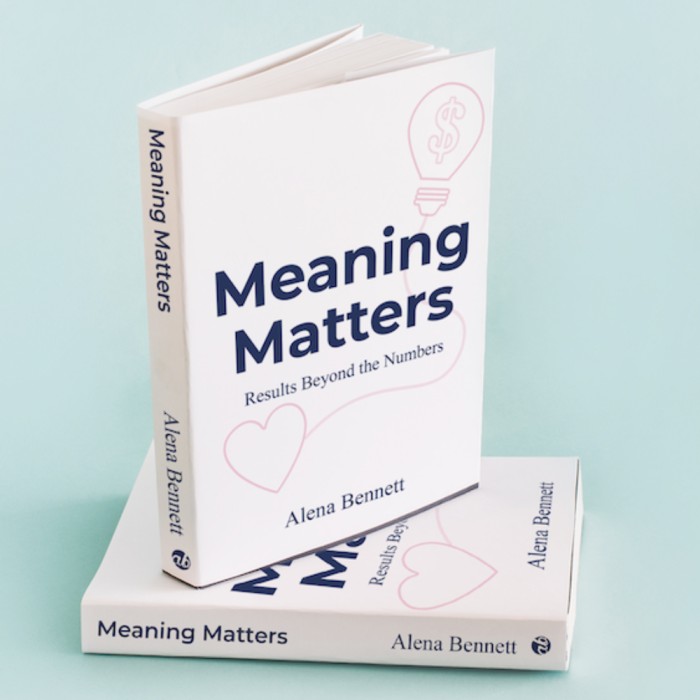
This is the trusted guide for CFOs to lead with IMPACT and create VALUE.
It's time for women in finance to find power in their purpose!