True Innovation Requires Intentionally Designed Waste
• Learn why maximum resource utilisation can make organisations fragile rather than productive.
• How AI is amplifying our long-running obsession with hyper-optimisation.
• Discover how intentionally designed waste can create space for experimentation, and the creation of long-term value.
Jensen Huang, CEO of Nvidia recently painted a picture of how he imagined humans will interact with AI in the not-to-distant future.
"Your agents are harassing you, micromanaging you, and you're busier than ever" he told a panel at the Stanford Graduate School of Business.

He said it with a laugh, to reassure graduates that AI was not going to wipe out their careers before they had even started. Instead, he predicted with mirth, it was just going to be a really annoying micromanager, harassing them to new heights of efficiency.
There is, admittedly, no shortage of unhinged things being said by AI leaders at the moment. However this one has stayed with me.
Not because it isn't true. I imagine this dystopian future awaits all of our children. But because it is simply a continuation of a long-running theme that pre-dates LLMs.
The obsession with hyper-optimisation, with running every system, every team, every hour at maximum capacity, has been a management religion for decades. AI is just the latest chapter in this quest.
The biggest problem isn't AI. It's that our quest for endless productivity is in itself, wholly unproductive.
Maximum Capacity is a Mathematical Fallacy
When you engineer out every inefficiency, every slack hour, every redundant resource, you also engineer out the exact buffer your business needs to pursue new ideas, and survive the unexpected.
Modern management has treated 100% resource utilisation as the holy grail of productivity. When in reality, hyper-efficient organisations look efficient for a time. Right up until the moment they experience any sort of setback or their circumstances change. At which point it becomes clear that they are, in fact, catastrophically fragile.
When there is no slack in a system, there is no capacity to absorb variation. Businesses spent decades building lean, just-in-time supply chains only to have a microscopic virus send them grinding to a halt.
Your workforce is no different.
True Innovation Cannot Occur in a Zero-Slack Environment
True innovation, the kind that creates new categories, new competitive points of difference, or even just new sources of efficiency on the shop floor, is messy, unpredictable, and deeply incompatible with a workforce that is booked back-to-back, with every hour spoken for, and every cognitive cycle allocated to the execution of existing commitments.
It requires what I've come to think of as intentionally designed waste.
How to Architect Intentionally Designed Waste
The word "waste" makes finance people uncomfortable, which is partly why I've chosen it deliberately.
Experimentation is a gamble. It produces a wide range of outcomes, most of them not immediately useful. Standard efficiency metrics will always mislabel this investment as waste, because standard efficiency metrics were designed to measure execution, not exploration. They are the wrong tool for the job.
What innovation actually requires is a deliberate financial and operational commitment to trial and error. Ring-fenced time, budget with no guaranteed return, and a structural tolerance for failure that is agreed upon in advance.
It needs its own line item in the budget.
And then it requires senior management to do something that does not come naturally to most organisations running on efficiency metrics alone: trust their people enough to leave them alone to think and to experiment. Even if it looks a little messy.
So my question to you this week is this:
What budget, time, or decision-making authority could you deliberately set aside for work that may not produce a measurable return this quarter, but could create strategic value over the next three years?
And what guardrails could you put in place to make that freedom commercially responsible?
I'd love to hear your thoughts.

Author: Alena Bennett
Alena works with leaders and their teams to connect technical and leadership skills so they can deliver to deadline without killing their people.

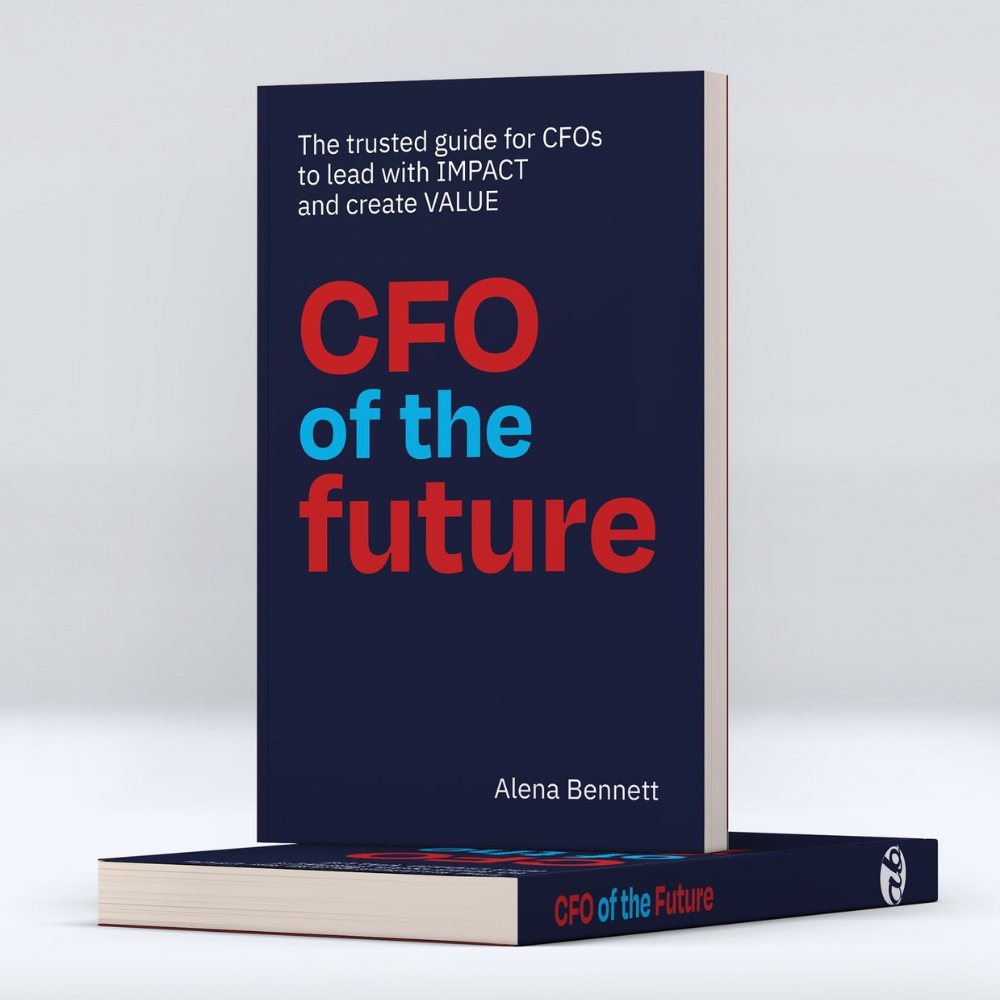
This is the trusted guide for CFOs to lead with IMPACT and create VALUE.
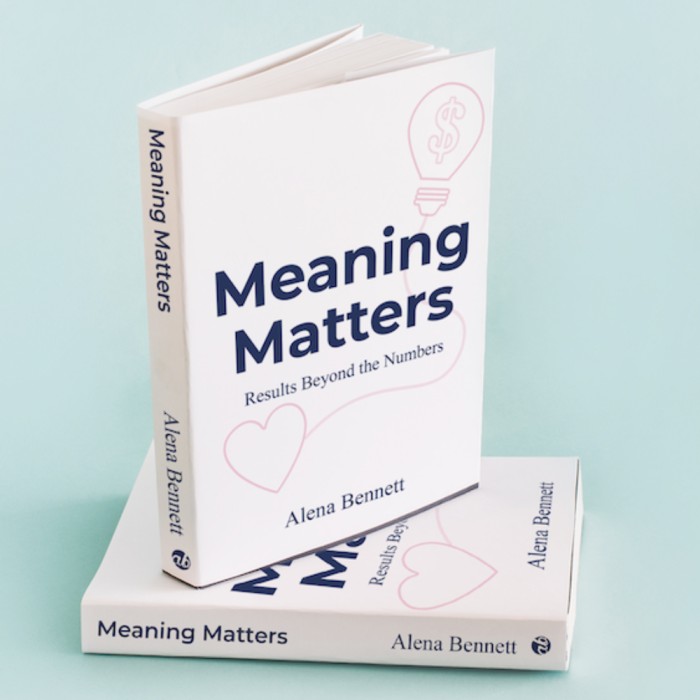
It's time for women in finance to find power in their purpose!