How Much Mileage Is Your Business Getting From Its Conversion Efficiency Engine?
• Discover the Conversion Efficiency Engine: a systems framework that can help senior leaders visualise how to improve efficiency without cutting budget
• Uncover how friction in one business function can create drag in another - and why most leaders can't see it.
If you put $1 of fuel into an engine, you don't get $1 of mileage out.
Fuel alone doesn't produce anything. It needs oxygen to combust. When fuel and oxygen combine, they create energy.
But that energy never reaches the wheels in full. Friction inside the engine eats some of it. Drag outside the car consumes more. What's left is your mileage.
Every business works the same way.
Fuel is your capital. Oxygen is your people. When the two combine effectively, they create gross value. But that value is then eroded by friction (internal factors) and drag (external forces) before it can be realised as enterprise value.
I call this system the Conversion Efficiency Engine.
Here's how it works.
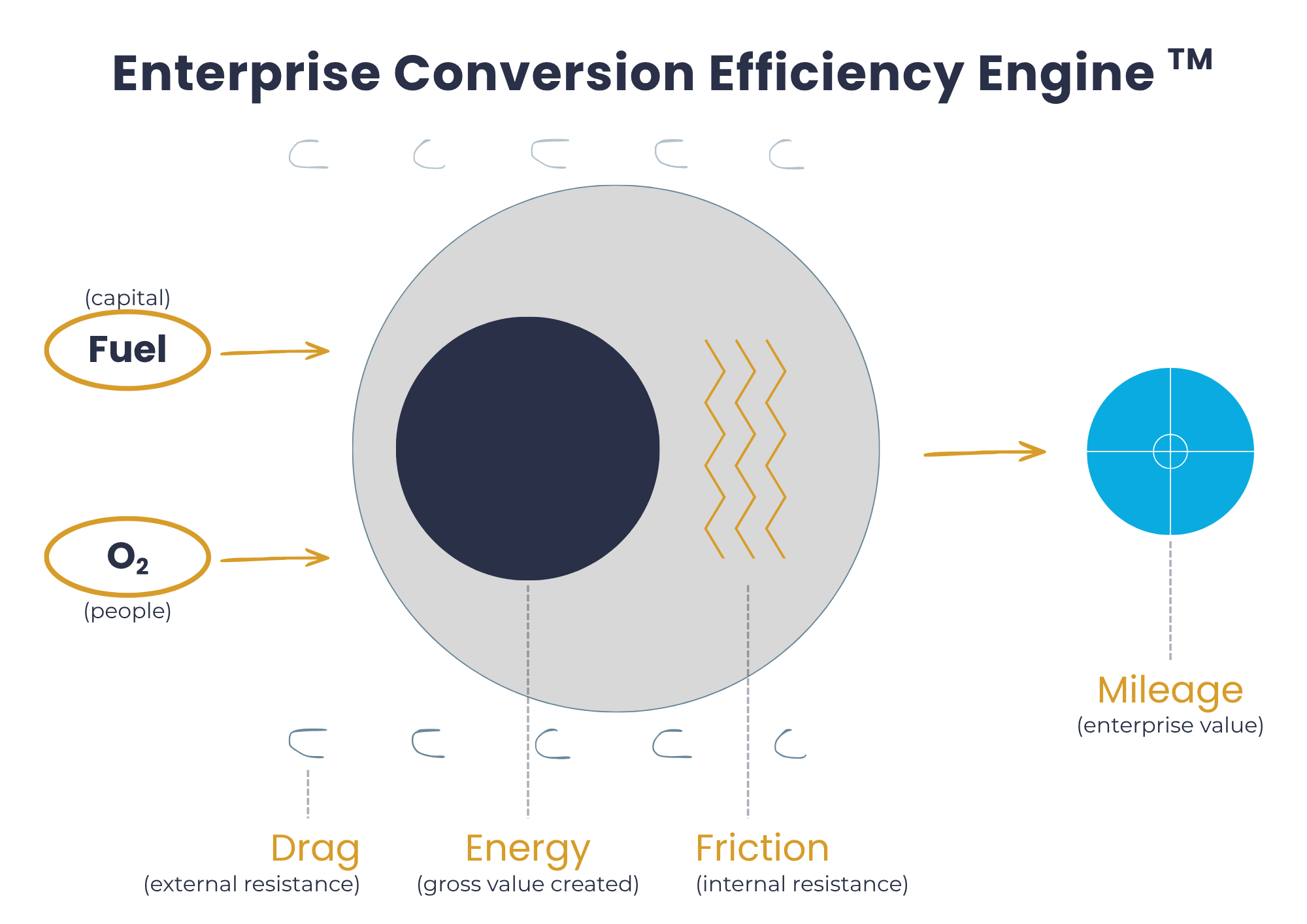
Fuel (capital) + Oxygen (people) = Gross Value Created - minus Friction - minus Drag = Mileage (enterprise value)
Fuel is your available capital.
Oxygen is your human effort.
Gross value created is the total productive value your business is capable of generating when capital and people combine. It's the full potential of the system before any of it is lost to friction or drag.
Friction is internal resistance. In an engine, it's metal parts grinding against each other. In a business, it's slow decision-making, duplicated effort, misaligned teams, and the organisational complexity that compounds with every new hire, product line, or market entry.
Drag is external resistance, and it increases with speed. In a business, drag is the compliance burden that grows with scale, overheads that outpace revenue, competitive tension and market headwinds.
Mileage is the output. It's the total enterprise value created by all the conversion factors combined.
Most leadership teams know how much mileage the business is getting.
What they lack is visibility across the full system. And without both visibility of and accountability for the entire business ecosystem, it's almost impossible for individual division leads and those who work for them to understand where and how friction and drag intercept.
Individual leaders can see friction in their own function. But they can't see how friction in one area creates drag in another. They can't see how a decision made in procurement compounds cost in operations, or how a hiring choice in sales erodes margin in delivery.
And even if they could, most functional leaders don't have the influence or often even the incentive to ensure that their inputs aren't creating waste somewhere else in the engine.
Efficiency is a systems outcome. As the leader responsible for the dashboard, the CFO has visibility over the entire business system.
Which makes them uniquely positioned to engineer the most efficient system possible.
Capital discipline × Human discipline = Enterprise value
This is the philosophy that underpins The Real Math of Business. And it is expressed beautifully in nature and in industry whenever forces combine to create and utilise energy.
What would change in your business if your CFO had a mandate not just to measure mileage, but to engineer it?
I'd love to hear your thoughts.

Author: Alena Bennett
Alena works with leaders and their teams to connect technical and leadership skills so they can deliver to deadline without killing their people.

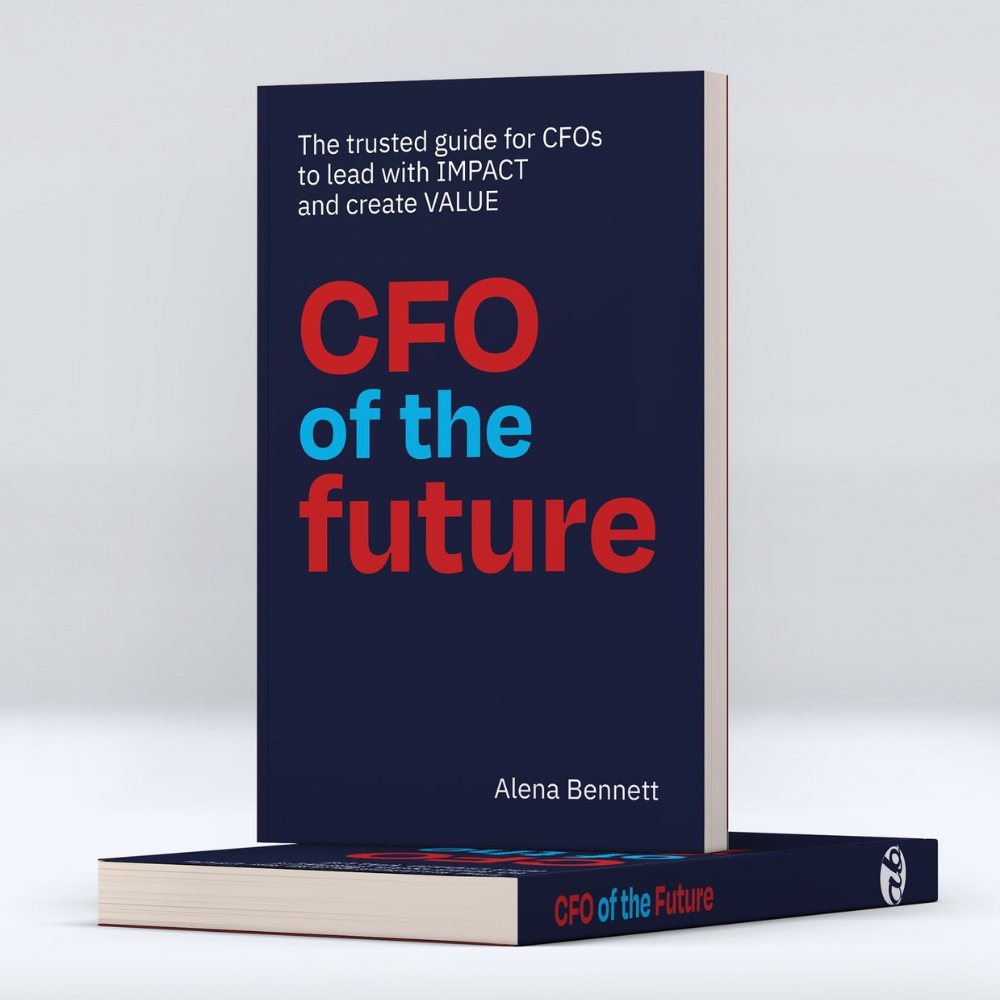
This is the trusted guide for CFOs to lead with IMPACT and create VALUE.

It's time for women in finance to find power in their purpose!