Introducing The CEOs Secret Weapon: The Boardroom Whisperer

• Understand the CEO's role as storyteller-in-chief
• Discover why why a great CFO acts as the boardroom whisperer
• Learn how metaphor and storytelling can invite valuable debate.
In 2015, Toshiba was rocked by a $1.2 billion accounting scandal after it was revealed the company had been overstating profits for more than seven years. The share price plummeted more than 40% and associated job cuts and writedowns weakened investor sentiment further. The share price has never recovered.
What independent investigators discovered was not a few bad apples, but a widespread culture that discouraged challenge and dissent, a culture that permeated the business from the shop floor all the way to the boardroom.
What We Can Learn From Toshiba
Whilst I've never seen an example quite as toxic as Toshiba, I have in the past coached senior leaders whose attitude to SLT and board meetings brings to mind the Toshiba example.
When we'd sit down together to discuss their dashboards or board packs, it was clear that their core objective during high-level meetings was to get in and get out with as few questions as possible.
However, no pushback doesn't equal alignment. As the Toshiba example makes plain, it can be a red flag for a lack of engagement or avoidance. It can mean that the board hasn't been given a meaningful opportunity to weigh in. That they've been talked at, not drawn into the conversation.
An Opinionated Board Is Good For Business
The point of getting your best and brightest in a room together is to extract as much value from their skills and insights as possible. It's to stress test strategy and assumptions and to surface risks.
By treating leadership meetings like a high school exam in which they can achieve a perfect score by getting as few questions wrong as possible, leaders dilute the value of those meetings.
Not only that, but when directors contribute to ideating and shaping the strategy (not just approving it), they take ownership and it makes a business leaders path to buy-in easier.
The CEO As The Storyteller-in-Chief
But that kind of contribution doesn't happen in a vacuum. To get that kind of engaged contribution, you have to create the environment for it. That's where the CEO plays a critical role.
The CEO can make the Chair's role a lot easier by playing the role of chief storyteller. Because the way the CEO presents the story of the business determines the quality of conversation around the table.
If you want an opinionated board, you have to give them something to have an opinion about. And that starts with you.
When you present not just "here's the update" but rather "here's the story so far, what are we missing?", you reframe the board's role in the conversation and open the door to debate.
Storytelling creates space for perspective. It invites the board to see what you see and how you see it. Not just "our profit is below budget" but "here's what our customers are telling us", "here's what that number really means on the ground."
The CEO's Secret Weapon
But let's be honest: even the most insightful, well-informed debate can have a downside.
Too many voices with competing agendas can steer conversations into unproductive territory. You can find yourself leaving the room with more questions than answers, and more work for yourself rather than greater clarity or direction.
That's where your most powerful ally in the room comes in.
Enter The Boardroom Whisperer: The CFO
Whenever debate around the boardroom table begins to descend into unproductive territory, a great CFO can be brought in to play the role of the boardroom whisperer; a calm, credible voice who can steady the room.
They can operate as a strategic translator. They bring the investor perspective. And because they're often more deeply embedded in governance than the CEO, they're typically seen as more conservative, more grounded by the data, and, often, more neutral.
They fill the trust gap. They're close to the numbers and they understand the nuance. In many organisations, the CFO has more boardroom experience than the CEO, and that can be a tremendous asset.
This is why I teach Powerful Executive Presence in my CFO Boardroom program. Because a Playmaker CFO doesn't just support the CEO. They fortify them. They make the CEO's job easier, and they help extract maximum value from the board.
They can also act as an extra set of eyes and ears, able to pick up on what's not being said, and to debrief with the CEO and Chair after the meeting to make the next one even more effective.
So I'll leave you with this reflection:
What kind of story are you telling in the boardroom?
And most importantly: "Who's helping you tell it well?"
I'd love to hear your thoughts.

Author: Alena Bennett
Alena works with leaders and their teams to connect technical and leadership skills so they can deliver to deadline without killing their people.

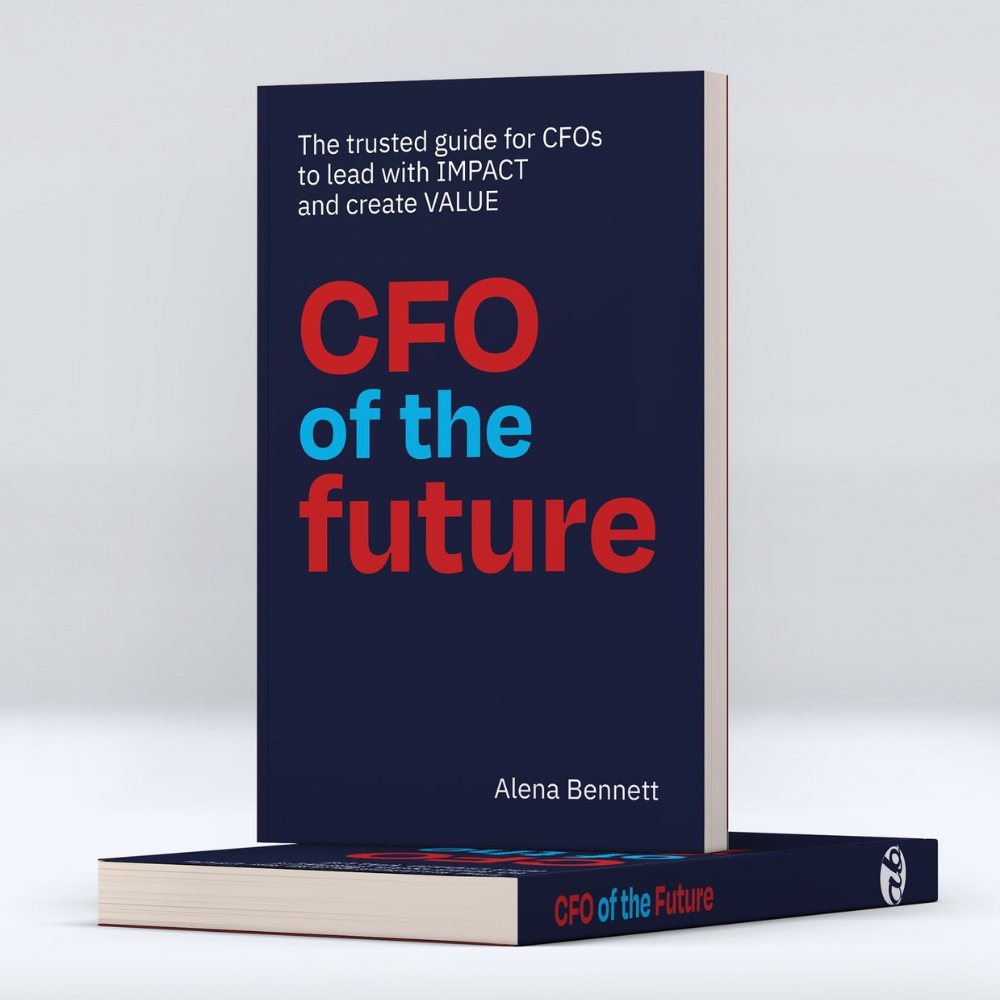
This is the trusted guide for CFOs to lead with IMPACT and create VALUE.

It's time for women in finance to find power in their purpose!