Why CFO Stagnation Hurts CEO Performance
• Learn why stagnation is the enemy of your CFO, and your business
• Discover the real cost of a stagnating CFO
• Ask how you can help your CFO to 'grow in place'
In the first part of this three part blog series about the consequences of career stagnation and the benefits of 'growing in place', I introduced one of my favourite fables. It's about a monkey who reaches into a jar to grab a banana, but he can't pull his hand back out unless he lets go of his prize.
He's not really trapped, per se; in his mind he feels as though he's choosing the certainty of the banana in his hand over the perceived risk of letting go and pursuing another, less certain option. It's that perception that keeps him stuck.
It's an analogy that we often draw on when discussing the impulse to stay in a job you've outgrown for the money, status or perceived stability.
This week I want to talk about the costs to both the CFO and, most significantly their CEO of a CFO who feels like the monkey in the fable. And what they can do about it.

The Cost to the CFO
For your CFO, a lack of feeling stretched or challenged may lead to a lack of energy and enthusiasm, an erosion in confidence and a decline in their problem solving ability, even without an obvious decline in performance.
The Cost the CEO
For the CEO, the real risk - and cost - becomes missed leverage.
In their research on status quo bias, William Samuelson and Richard Zeckhauser found that people tend to favour the current state of affairs, even when alternatives are objectively better. This bias increases when decisions are complex, high-stakes, and personally consequential.
In other words, precisely the condition senior leaders are operating under when they feel as if they aren't being stretched and challenged.
Not only will a CFO who isn't performing at their best subconsciously limit growth opportunities, their inertia will result in increased mental load that leaves the CEO unable to focus on their bigger priorities.
The Upside of Letting Go
When a senior leader decides to grow in place, they don't have to choose between the certainty of their current circumstances and the uncertainty of leaving and finding themselves right back where they started. They can have the best of both worlds.
They just might need a little help.
That's why I developed the CFO Boardroom. To take good CFOs and make them world-class. And make their organisations world-class right along with them.
In part 3 of this 3 part blog, I'll be showing you how. Keep an eye out for next Friday's update.
In the meantime, I'd love to leave you with this question to reflect on, "if your CFO stayed exactly as they are for the next three years, what would that cost you? Really?"
I'd love to hear your thoughts,

Author: Alena Bennett
Alena works with leaders and their teams to connect technical and leadership skills so they can deliver to deadline without killing their people.

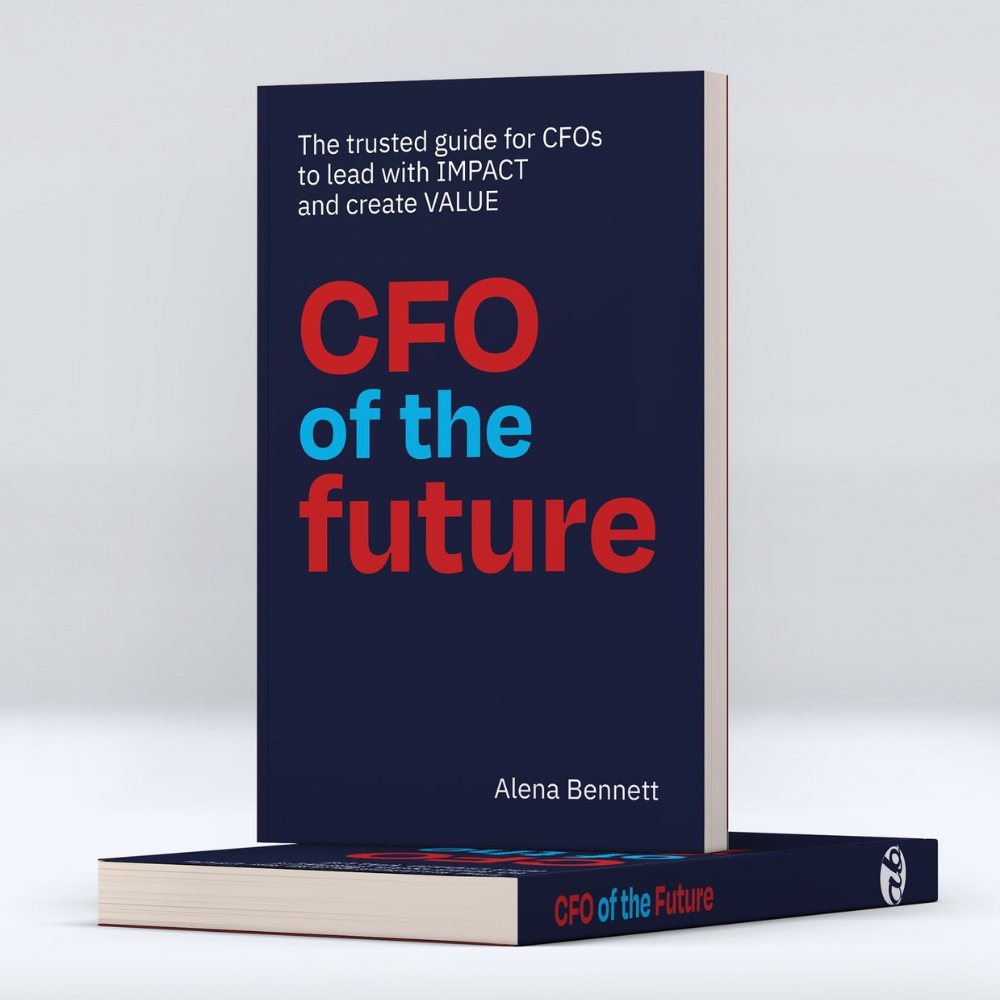
This is the trusted guide for CFOs to lead with IMPACT and create VALUE.

It's time for women in finance to find power in their purpose!